Australian treatment and pricing reference | 5 November 2026
6 Minute Read
It has been a hot minute since I wrote about menopause hormone therapy but now feels like a good time to revisit the conversation, because there have been some positive changes and as well, exciting new products in development right here in Australia, being made by women for women.
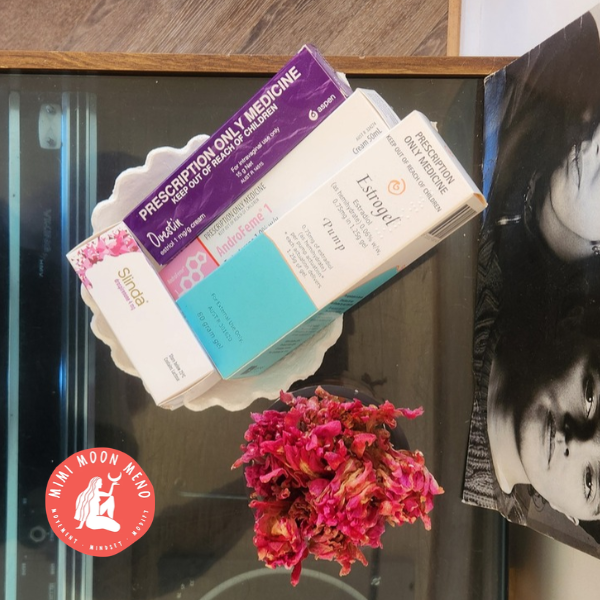
There are more treatment options for Australian women experiencing perimenopause and menopause than many realise. These include estrogen patches, gels and tablets, progesterone, combined therapies, vaginal treatments and testosterone.
One significant development has been the PBS listing of three treatments from 1 March 2025: Estrogel, Prometrium and Estrogel Pro. The Australian Government estimated that these listings would reduce costs for around 150,000 women.
In this article I am covering what hormone therapy women can access, what is subsidised through the Pharmaceutical Benefits Scheme (PBS), and what you may actually pay. I am also dispelling myths about MHT and putting in a small opinion about antidepressants.
But before we explore the latest MHT options, let’s address a question that still influences so many women’s decisions: Is menopausal hormone therapy (MHT) safe? The reassuring answer is yes, for most healthy women, particularly those who begin treatment before age 60 or within 10 years of menopause, the benefits generally outweigh the risks.
The original 2002 Women’s Health Initiative (WHI) findings created widespread fear about breast cancer, cardiovascular disease and blood clots, contributing to a dramatic decline in MHT use, including among younger women who may have benefited. More than two decades of further research have provided a much clearer understanding of how age, timing, hormone formulation and method of delivery influence these risks.
Beyond relieving hot flushes and night sweats, menopausal hormone therapy (MHT) offers important benefits for women’s health and wellbeing. Systemic MHT is proven to protect bone density and reduce the risk of osteoporosis-related fractures, while vaginal estrogen helps maintain vaginal and urinary tract health, including reducing recurrent urinary tract infections. MHT can also improve sleep, menopause-related mood symptoms and brain fog, while having favourable effects on some cardiovascular and metabolic markers, including cholesterol, insulin sensitivity and abdominal fat distribution. For appropriately assessed women, testosterone therapy may also improve sexual desire and wellbeing.
While no treatment is entirely without risk, MHT is a safe and effective option for most appropriately assessed women, with treatment tailored to their individual health needs, symptoms and circumstances.
The next most important thing to cover off on with MHT is it that:
The treatment is individual. There is no single best MHT for every woman, and not everyone needs hormone therapy. Not everyone wants to take it either and that is absolutely fine.
Route of administration. Oral and transdermal estrogens have different risk profiles, including in relation to venous thromboembolism.
A uterus generally needs protection. Systemic estrogen usually requires an appropriate progestogen if the uterus is present.
Local vaginal therapy is different. Women may use local treatment independently or alongside systemic MHT.
Testosterone has a specific clinical role. It should be prescribed following assessment and monitored appropriately.
Not everything in midlife is menopause. New, persistent or concerning symptoms still require proper medical assessment.
A quick note on antidepressants. Antidepressants have their place, but they should not automatically be the first response to menopause-related mood changes. Too often, women experiencing anxiety, low mood, irritability or emotional changes during perimenopause are treated for the symptoms without sufficient consideration of the hormonal changes that may be contributing. While antidepressants (SSRIs and SNRIs) can be important and effective treatments, particularly for clinical depression and anxiety disorders, international menopause guidelines recommend considering MHT for depressive symptoms associated with menopause that do not meet the criteria for clinical depression. Women deserve more than a reflex prescription. They deserve a thorough assessment, an informed conversation about hormonal and non-hormonal treatment options, and care that considers the whole picture.
What Hormone Therapy is Available?
1. Systemic estrogen-only therapy
These treatments deliver estrogen throughout the body and can help with symptoms such as hot flushes, night sweats and sleep disruption, as well as reducing bone loss.
Women who have a uterus generally need an appropriate progestogen alongside systemic estrogen to protect the endometrium. Women who have undergone a total hysterectomy can generally use estrogen alone, but there may still be benefits of progesterone to consider with treatment.
| Brand | Form and available strengths | PBS |
| Estradot | Patch, 25, 37.5, 50, 75, 100 micrograms/day | Yes |
| Estraderm MX | Patch, 25, 50, 75, 100 micrograms/day | Yes |
| Estrogel | Pump gel, 0.75 mg estradiol per pump | Yes |
| Sandrena | Gel sachets, 0.5 mg and 1 mg | Yes |
| Progynova | Oral tablets, 1 mg and 2 mg | Yes |
| Zumenon | Oral tablets, 2 mg | Yes |
| Estrofem | Oral tablets, 1 mg and 2 mg | No |
| Premarin | Conjugated oestrogen tablets, 0.3 mg and 0.625 mg | No |
Note: Patch supply remains an important issue in November 2026. Several Estradot strengths are in limited supply, and temporary alternative products, including Estramon, are authorised to address shortages.
Keep an eye on LORAI Health: Founded in Australia, LORAI Health is developing next generation transdermal technologies designed to improve treatment continuity, patient experience, and long-term health outcomes. What began as a response to ongoing challenges in menopausal hormone therapy has evolved into a broader mission: advancing the future of transdermal medicines through innovation, manufacturing resilience, and patient-centred design.
2. Progesterone and progestogens
These are commonly prescribed alongside systemic estrogen for women with a uterus.
| Brand | Hormone and formulation | PBS |
| Prometrium | Body-identical micronised progesterone, 100 mg and 200 mg oral capsules | Yes, eligible 100 mg packs |
| Utrogestan and generic progesterone products | Micronised progesterone capsules | Check specific product and indication |
| Provera | Medroxyprogesterone acetate tablets | Yes, selected strengths/packs |
| Ralovera | Medroxyprogesterone acetate tablets | Check specific pack |
| Primolut N | Norethisterone 5 mg tablets | Check indication |
| Mirena | 52 mg levonorgestrel intrauterine system (IUS) | Yes, subject to PBS criteria |
Note: Prometrium’s 100 mg PBS listing commenced in March 2025. Mirena is PBS-listed, but PBS access for contraception or heavy bleeding does not necessarily mean it is subsidised when prescribed solely for MHT.
3. Combined estrogen and progestogen therapies
These offer both hormones in one treatment and/ or combination pack.
| Brand | Formulation | PBS |
| Estrogel Pro | Oestradiol gel and micronised progesterone capsules | Yes |
| Femoston 1/10 and 2/10 | Sequential oestradiol/dydrogesterone tablets | Yes |
| Femoston-Conti | Continuous combined tablets | No |
| Estalis Sequi 50/140, 50/250 | Sequential combination patches | Yes |
| Estalis Continuous 50/140, 50/250 | Continuous combination patches | Yes |
| Trisequens | Sequential oestradiol/norethisterone tablets | No |
| Kliovance | Continuous combined tablets | No |
| Kliogest | Continuous combined tablets | No |
| Angeliq 1/2 | Oestradiol/drospirenone tablets | No |
| Bijuva 1/100 | Oestradiol 1 mg and micronised progesterone 100 mg capsule | No |
A useful distinction for women is the difference between sequential (cyclical) and continuous combined therapy. Sequential therapy generally includes progestogen for part of each cycle and may produce a withdrawal bleed. Continuous combined therapy generally provides both hormones throughout treatment and is typically used after menopause, although treatment decisions are individual.
4. Other systemic hormonal treatment options
| Brand | Medication | PBS |
| Livial | Tibolone 2.5 mg tablets | No |
| Xavion / tibolone generic brands | Tibolone 2.5 mg tablets | No, unless a particular listing changes |
| Duavive | Conjugated oestrogens with bazedoxifene | No |
Tibolone has oestrogenic, progestogenic and androgenic activity. Duavive combines oestrogens with a selective oestrogen receptor modulator (SERM) rather than a conventional progestogen.
5. Vaginal hormone treatments
These treatments primarily address genitourinary symptoms (GSM) of menopause, such as vaginal dryness, discomfort, painful intercourse and some urinary symptoms.
| Brand | Formulation | PBS |
| Vagifem Low | 10 microgram vaginal oestradiol pessary | Yes |
| Estro-Pess | Vaginal oestradiol pessary | Check specific pack |
| Ovestin | Oestriol vaginal cream | Yes |
| Ovestin Ovula | Oestriol vaginal pessary | Yes |
| Vespen | Oestriol vaginal preparation | Check specific pack |
| Intrarosa | Prasterone (DHEA) 6.5 mg vaginal pessary | No |
Low-dose local vaginal estrogen is not equivalent to systemic MHT. It generally does not require an additional progestogen for endometrial protection. Intrarosa is a local DHEA treatment rather than a conventional estrogen formulation.
6. Testosterone for menopausal women
AndroFeme 1 (1% testosterone cream) This is the female-specific testosterone formulation registered in Australia for postmenopausal women with hypoactive sexual desire dysfunction (HSDD), following appropriate assessment.
It comes in a 50 mL tube, is prescription only and is not PBS-subsidised
Other testosterone formulations, including Testogel, Testavan, Androgel and AndroForte, exist in Australia, but are primarily formulated for men. Use in women is generally off-label and requires particular attention to dosing and monitoring.
Testosterone is not routinely recommended for treating brain fog, fatigue, weight gain or low mood alone. Evidence-based recommendations primarily support consideration for appropriately assessed HSDD, with monitoring to avoid excessive testosterone exposure.
7. Australian retail price comparison
There was a useful February 2026 investigation by ABC News using pharmacy retail prices for several non-PBS therapies. The figures below are published price examples, not guaranteed current RRPs. They provide a reasonable starting point for showing you what the costs might be.
| Medication | Published price (AUD) | PBS |
| AndroFeme 1, 50 mL | $103.99 | No |
| Bijuva, 28 capsules | $53.99 | No |
| Angeliq 1/2 | $52 | No |
| Kliovance | $47 | No |
| Kliogest | $47 | No |
| Trisequens | $42 | No |
| Femoston-Conti | $15 | No |
| Livial | $59 | No |
| Tibolone WGR | $38 | No |
| Estrofem | $30 | No |
| Premarin | $38 | No |
| Intrarosa | $42 | No |
A note on treatment availability, PBS and pricing The information provided is intended as a general guide to menopausal hormone therapy options available in Australia as at November 2026. While every effort has been made to provide accurate information, medicine availability, formulations, PBS eligibility and pharmacy pricing are subject to change. Some products may also be affected by temporary supply shortages or discontinuation. Not all medications are PBS-subsidised for every indication, and private prescription prices can vary between pharmacies. For the most current information, please consult your pharmacist, prescribing healthcare professional, the Pharmaceutical Benefits Scheme (PBS) or the Therapeutic Goods Administration (TGA).
PBS pricing in 2026
| GENERAL PBS PATIENT | $25.00 | Maximum standard co-payment per eligible prescription |
| CONCESSION PATIENT | $7.70 | Maximum concessional co-payment per eligible prescription |
Note: These are maximum PBS co-payments, not flat prices. A PBS medicine may cost less, while brand premiums may increase the amount paid.
There isn’t one menopause solution because there isn’t one menopause experience.
Perimenopause and menopause can bring an extraordinary range of physical, emotional and cognitive changes. For some women, the transition is relatively straightforward. For others, symptoms can significantly affect their health, relationships, confidence, careers and everyday lives.
And sometimes, you do not even realise that what you are experiencing could be connected to menopause!
Symptoms can range from sleep disturbances, anxiety, brain fog and mood changes to joint pain, migraines, heart palpitations, urinary symptoms and changes in libido. Every woman’s experience is unique. Review the symptom checker to see the full range of symptoms.
Understanding what is happening in your body is important. But knowing what you can actually do to support yourself is where positive change begins.
The goal is to build your own menopause toolkit, with strategies that work for your body, lifestyle and circumstances.
And this is where my framework comes in: Movement. Mindset. Modify. ®
Supporting yourself involves much more than MHT alone, so if you would like to know more about what you can do to support yourself keep reading here
A final word! The information provided in this article is intended for general education and awareness only and should not replace personalised medical advice. Menopause is a highly individual experience, and not all treatments are suitable for everyone. All hormone therapies, medications and other treatment options should be discussed with an appropriately qualified healthcare professional, taking into consideration your symptoms, medical history, individual risk factors and personal circumstances. Never commence, change or discontinue prescribed treatment without appropriate medical guidance. The goal is to make informed decisions about your health, with the right information and professional support.
Sources and References
The information in this article has been informed by Australian and international clinical guidelines, peer-reviewed research, government publications and pharmaceutical regulatory information.
Clinical guidelines and research
- Australasian Menopause Society (AMS). Guide to Menopausal Hormone Therapy (MHT/HRT) Doses – Australia. Reference guide to hormone formulations, strengths and treatment regimens available in Australia.
Australasian Menopause Society – MHT/HRT Guide - The Menopause Society (formerly North American Menopause Society). (2022). The 2022 Hormone Therapy Position Statement. Menopause, 29(7), 767–794. Evidence on MHT effectiveness, safety, bone health, cardiovascular considerations and individualised treatment.
Read the Position Statement - National Institute for Health and Care Excellence (NICE). (Updated 2024). Menopause: Identification and Management (NG23). Recommendations covering hormone therapy, menopausal mood changes, genitourinary symptoms, testosterone and non-hormonal treatments.
NICE Menopause Guidelines - Australasian Menopause Society. Testosterone Therapy in Postmenopausal Women: Evidence, Efficacy, and Safety. Clinical guidance on testosterone therapy, hypoactive sexual desire dysfunction (HSDD), prescribing and monitoring.
AMS – Testosterone Therapy for Women
Australian medicines, PBS access and treatment costs
- Australian Government, Department of Health and Aged Care. (2025). More Choice, Lower Costs and Better Health Care for Women. Announcement of PBS listings for Estrogel, Prometrium and Estrogel Pro from 1 March 2025.
Australian Government Announcement - Australian Government, Pharmaceutical Benefits Scheme (PBS). (2026). Pharmaceutical Benefits Scheme Schedule. Official information on subsidised medicines, eligibility, formulations and patient costs.
PBS Official Website - Australian Government, Department of Health, Disability and Ageing. (2026). PBS Co-payments. Information on the $25 general and $7.70 concessional maximum PBS co-payments introduced or maintained from January 2026.
PBS Co-payment Information - Therapeutic Goods Administration (TGA). Australian Register of Therapeutic Goods (ARTG) and Product Information. Official Australian medicine registration, formulation, prescribing and safety information.
TGA – Medicine Information - Therapeutic Goods Administration (TGA). (Updated October 2026). About the Shortage of Transdermal HRT Patches. Information on Australian patch shortages, alternative supply arrangements and expected availability.
TGA – HRT Patch Shortages - Branley, A. (10 February 2026). ABC News. Painkillers and HRT Therapies Among Drugs Not Being Subsidised Under PBS. Australian investigation into private prescription costs, PBS access and medicine affordability.
Read the ABC News Investigation
Australian innovation
- LORAI Health. (2026). Building the Future of Transdermal Drug Delivery. Australian research and development of next-generation transdermal medicines, including technologies relevant to menopausal hormone therapy.
LORAI Health
Information current as at 5 November 2026. Medicine availability, pricing, PBS eligibility and clinical recommendations may change. Published retail prices are indicative pharmacy prices, not nationally fixed recommended retail prices.